Ventilated vs Sealed Covers: How OEM Buyers Choose
A cover has one job: keep what is underneath usable. How it does that changes with one decision the whole cover. Ventilated or sealed.
Ventilated covers breathe. Sealed covers shut everything out. The two sound like opposites. In practice they solve two different problems, and picking the wrong one makes a cover useless in a few months.
Most cover failures start with moisture trapped inside. This guide separates the two so you can spec the right construction for your equipment and your climate.
Ventilated vs Sealed: Comparison Table
| Characteristic | Ventilated | Sealed |
|---|---|---|
| Moisture Buildup | Low, air escapes | High, trapped inside |
| Rain Protection | Moderate | Highest |
| Dust Exclusion | Moderate | High |
| Condensation Risk | Low | High |
| Chemical Exposure | Moderate | High |
| Best Use | Intermittent use, warm climates | Outdoor storage, high rain |
| Production Cost | Higher, extra panels | Lower |
Ventilated Covers: Letting Moisture Out
A ventilated cover carries a mesh, grommet, or vent panel that lets trapped air escape. Most covers get this wrong the other way: they seal tightly, then condense moisture on the inside overnight, and the equipment sits in its own humidity until it rusts or molds.
Ventilation solves that. Warm air rises out of the vent, the interior stays close to ambient, and the equipment stays dry without the cover turning into a greenhouse.
The tradeoff is rain. A vent is a hole, and a hole lets water in if it is not built right. A good vent is a covered flap or a gore on a downward-sloping face, so water runs off instead of in. Spec the vent on the upper face, never the bottom, and make sure the flap overlaps the opening.
Ventilated covers suit equipment that runs intermittently, sheds heat, or sits in a warm humid shop. Machine tools, generators that start under load, and anything that gets warm in use are good candidates.
Sealed Covers: Keeping Water Out
A sealed cover has no vent. A drawstring, elastic hem, or zipper closes it against the weather, and the goal is a tight barrier. For equipment stored outdoors in rain or snow, a sealed cover keeps the fabric and the seams the only path for water.
The risk is the inside. If you seal damp air in, it condenses. That shows up as rust on bare steel, growth on upholstery, or fogged electronics. A sealed cover used on damp equipment stores the damp. The workaround is to dry the equipment before covering, or add a vent anyway.
Sealed covers suit outdoor storage where rain and road spray are constant: vehicles, trailers, generators parked outside, and equipment shipped on open trucks. They also suit anything exposed to chemicals, dust, and washdown, where you want the outside kept out.
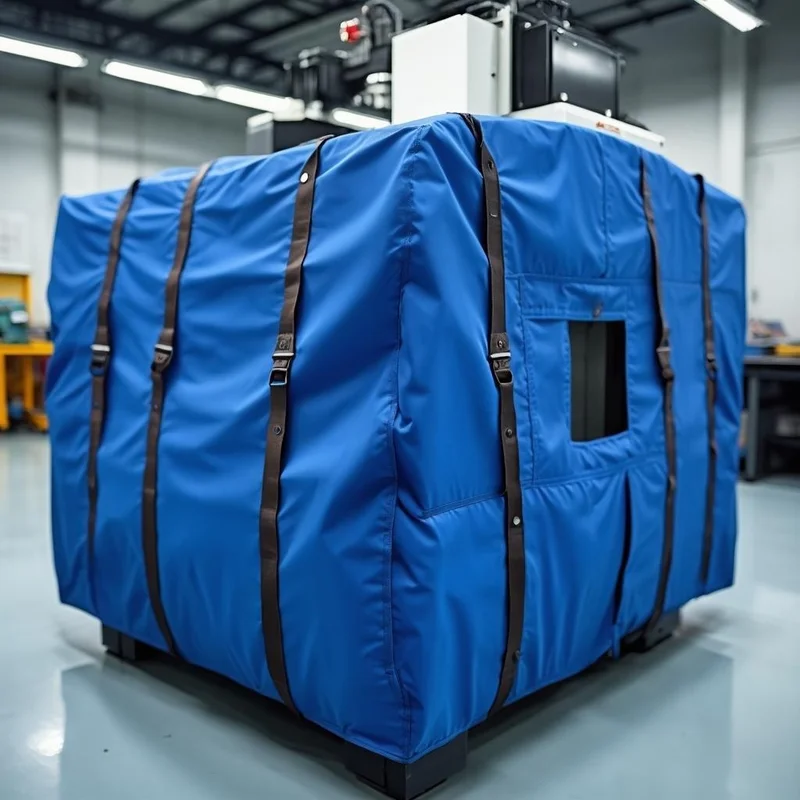
The Decision Framework
Choose on two inputs, not on habit. First, where does the cover live? Second, does the equipment run warm?
If the equipment runs warm or the environment gets humid, ventilate. The moisture your equipment produces is the bigger enemy than the rain it has to keep out. If the equipment is cold, stored outdoors in heavy precipitation, and never heats up, seal it.
Many real orders end up neither pure. A cover with a vent on one face and a tight elastic hem elsewhere gets you both: the moisture needs a way out, and the entry points are sealed. When a buyer asks for one or the other, ask what the equipment does and where it sits before you spec it.
For the full picture on why covers fail in the first place, see our protective cover failure guide.
Specifying the Right Construction
Put these four lines in the OEM spec sheet so the factory builds what you mean:
- Construction type: ventilated, sealed, or hybrid
- Vent placement and style: flap, gore, or mesh, and which face
- Closure: drawstring, elastic hem, velcro, or zipper
- Seam and hem treatment: taped, bound, or double-stitched, and whether waterproof
Ventilated covers cost more per unit because the vent panel is a separate process. A bag of 500 runs a tighter margin than a bag of 500 sealed covers. That price difference buys the thing that makes the cover work: an escape route for the moisture the equipment makes.
Material selection still drives half the outcome. Our cover durability guide covers the fabric and coating side, and the transport and storage article goes through the closure and hem details.
Frequently Asked Questions
Should I use a ventilated or sealed cover?
Ventilate if the equipment runs warm or the environment is humid. Seal if the equipment is stored outdoors in heavy rain or snow and does not heat up. Many orders suit a hybrid: a vent on the upper face plus a tight closure.
Do ventilated covers let rain in?
Only if the vent is built wrong. A vent on a downward-sloping face with an overlapping flap sheds water. A vent on the bottom face or an open mesh lets rain in. Vent placement matters more than the vent itself.
Why does my cover feel damp inside?
Condensation. A sealed cover traps the moisture already inside the equipment or the surrounding air, and it condenses overnight. The fix is to dry the equipment first or add a vent so the moisture can escape.
Do ventilated covers cost more?
Usually. A vent panel is an extra process, so a ventilated cover runs slightly higher per unit than a sealed one. The price buys an escape route for moisture, which is what keeps the equipment from rusting or molding.
What is a hybrid cover?
A cover with a vent on one face and a tight elastic hem or zipper elsewhere. It lets moisture escape while keeping the main entry points sealed, and it covers most machines that produce heat and also get rained on.