Industrial Machinery Covers: Complete OEM Buyer's Guide
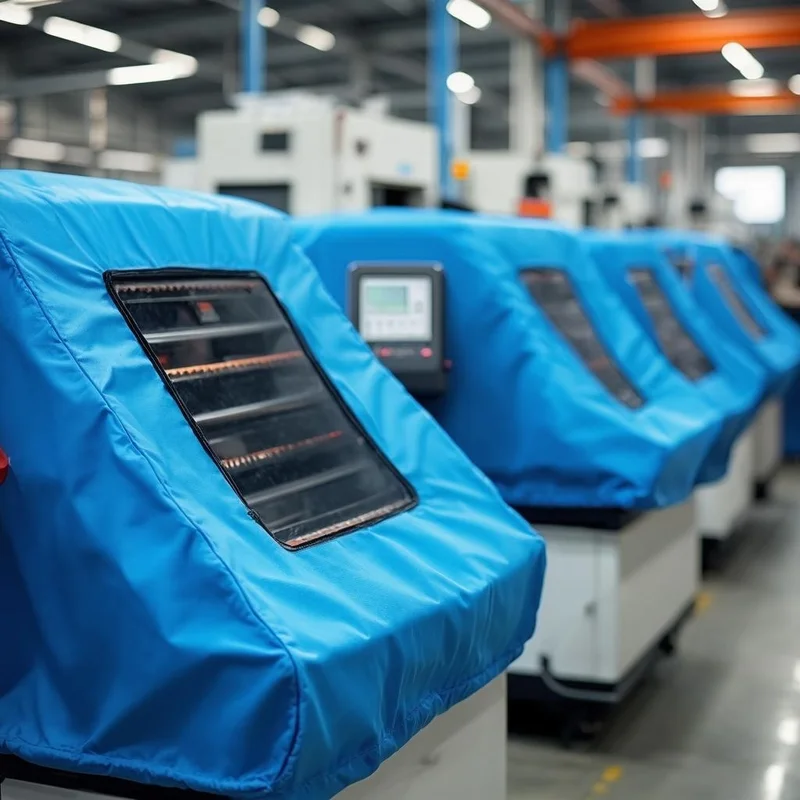
Industrial machinery covers protect a large capital investment, yet they are often the last item on the spec sheet and the first to be treated as an afterthought.
This guide covers the complete OEM buying process for industrial machinery covers, from environment analysis to inspection.
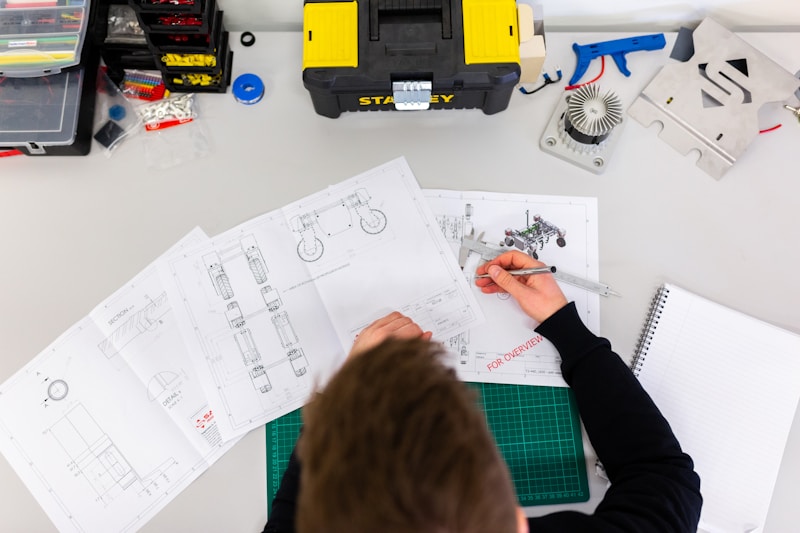
Start with the Environment, Not the Machine
The cover's job is defined by where the machine lives. Indoor clean room, outdoor yard, humid coastal plant, dusty foundry, each environment demands a different fabric and construction.
List the hazards: UV, moisture, chemicals, sparks, abrasion, extreme temperatures. Then match the fabric to the list, not to a catalogue photo.
Material Selection
Polyester with coating covers most industrial needs. 600D or 1000D with PU or PVC backing handles abrasion and weather.
PVC-coated polyester for chemical resistance and heavy duty. Silicone-coated fibreglass for high-temperature applications.
Each material has a price and a service life. The spec sheet should state both.
Construction Details
Seams sealed or taped, stress points double-stitched, and hardware corrosion-resistant. These three details separate an industrial cover from a consumer product.
Specify how the cover fastens: straps, buckles, or a drawstring hem. For machines that need frequent access, plan openings from the start.
The OEM Process
A good order goes: environment analysis, fabric selection, sample production, fit test, mass production, inspection. Skip the sample stage and you are trusting a drawing.
Request a pre-production sample on your actual machine. Fit issues are far cheaper to fix on one sample than on a container.
For more on this topic, see our material guide.
For more on this topic, see our procurement checklist.
For more on this topic, see our OEM guide.
Inspection Checklist
Before the container ships, run a practical inspection, not just a paperwork check.
Fit test: fit a sample on the reference machine. Confirm the cover reaches the floor on all sides and that openings align with access points.
Seam check: open the cover fully and examine every seam. Look for skipped stitches, loose threads, and unsealed sections where water could enter.
Hardware check: operate every buckle, strap, and zipper. Confirm the hardware matches the spec, especially corrosion resistance for outdoor use.
Fabric check: verify the fabric weight and coating against the spec sheet. A cover that feels thin next to the sample is a red flag.
Request photos or video of the inspection from the factory, and if the order is large, consider a third-party inspection service. The cost of catching one problem is far lower than the cost of shipping it.
Packaging and Delivery
Industrial covers are bulky, and packaging mistakes show up in the first pallet.
Specify how each cover is folded and bagged. Covers left loose in a carton arrive creased and damaged, and creases in coated fabric become permanent.
For sea freight, moisture is the enemy. Confirm cartons use a moisture barrier and that the covers are dry when packed. A cover shipped wet develops mildew before it reaches the customer.
Confirm the carton dimensions early with your forwarder. Covers that fit a standard pallet save money and avoid re-packing at the port.
Frequently Asked Questions
What fabric lasts longest outdoors?
For outdoor industrial use, 1000D polyester with a PVC coating and UV-stabilised thread typically lasts three to five years. Heavier coated fabrics last longer but cost more.
Do I need a sample before mass production?
Yes, for any machine with unusual dimensions or access needs. Fit issues found on a sample cost a fraction of issues found after a full production run.
What is the typical MOQ?
MOQ varies by size and fabric. Standard covers start around 100 pieces; large custom covers may have lower minimums. Lead time is typically 40 to 60 days.
Frequently Asked Questions
What fabric lasts longest outdoors?
For outdoor industrial use, 1000D polyester with a PVC coating and UV-stabilised thread typically lasts three to five years. Heavier coated fabrics last longer but cost more.
Do I need a sample before mass production?
Yes, for any machine with unusual dimensions or access needs. Fit issues found on a sample cost a fraction of issues found after a full production run.
What is the typical MOQ?
MOQ varies by size and fabric. Standard covers start around 100 pieces; large custom covers may have lower minimums. Lead time is typically 40 to 60 days.