Beyond the Spec Sheet: What a Custom Industrial Machine Cover Order Really Demandsds
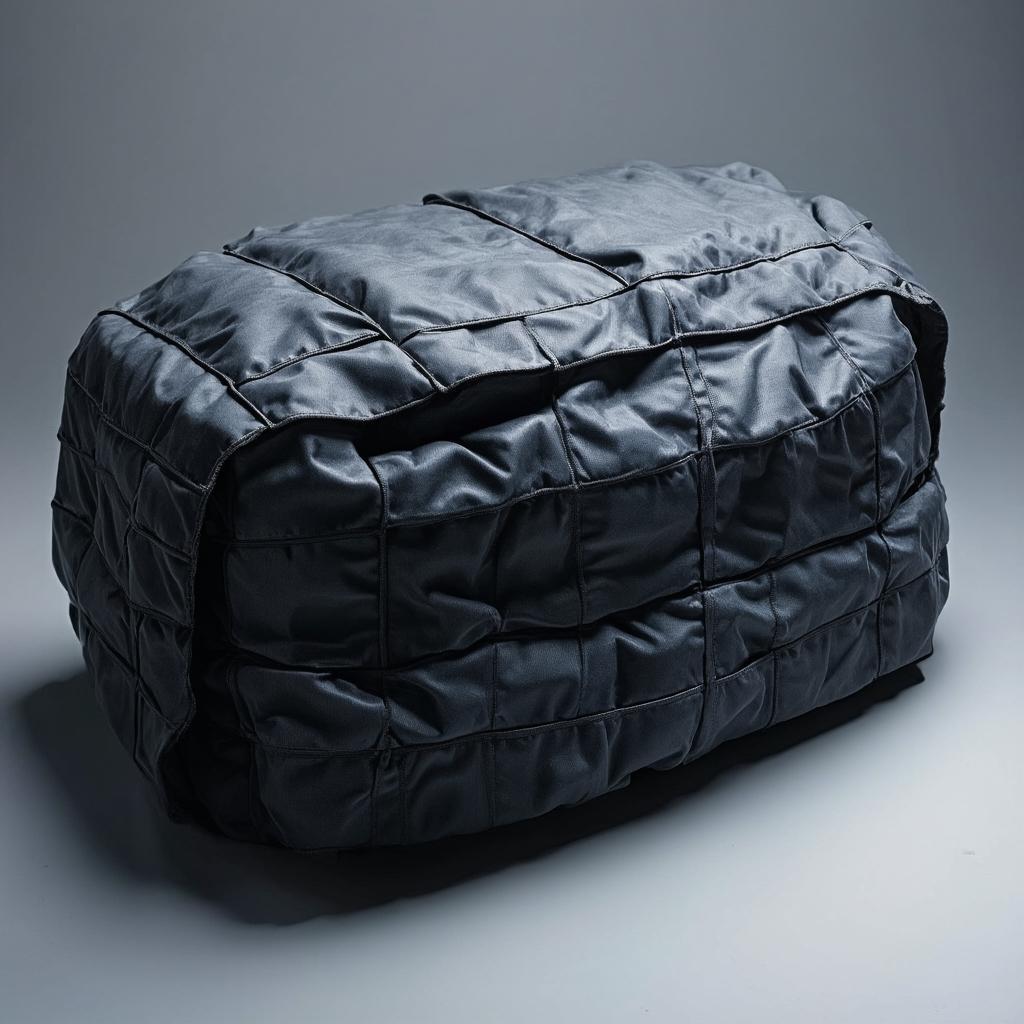
A client once sent us a purchase order for 400 CNC lathe covers. The spec sheet was three pages. Dimensions. Material. Color. Zipper placement. All correct.
We delivered on time. The covers fit.
Three months later the client called. The zippers on 60 covers had failed. Not broken — the zipper teeth were fine. The fabric around the zipper had torn along the stitch line, a neat 15-centimetre rip on every affected cover.
The spec sheet was right. The failure was something the spec sheet never mentioned: the zipper was installed on the bias grain of the fabric. Under tension — which happens every time someone stretches a cover over a machine corner — the bias has 2 to 3 percent more give than the straight grain. The zipper tape doesn't stretch. The fabric does. After a few hundred installation cycles, the stitches started pulling through the weave like a comb through wet hair.
This is what gets missed in industrial machine cover OEM orders. Not the big things. The small things that aren't on the spec sheet because nobody thought to put them there. For a walkthrough of the full manufacturing timeline, see our custom cover process guide.
The four decisions your spec sheet won't make for you
When you're ordering 500 machine covers from a factory in China, you're not just buying fabric and stitching. You're buying a series of manufacturing decisions that determine whether the covers work or fail. Most of these decisions are invisible on a drawing.
Seam placement relative to stress points. Every machine has corners. Every corner on a cover is a stress concentration. If your seam lands within 5 centimetres of a corner, it's carrying structural load it wasn't designed for. Good pattern makers offset seams from corners by at least 8 to 10 centimetres. The spec sheet won't tell you this. The prototype will. For more on fabric selection and material grades, see our Oxford fabric guide.
Thread type. Polyester bonded thread with UV inhibitor. Not nylon. Nylon absorbs 4 to 6 percent of its weight in water, swells, and degrades faster under sunlight. In industrial environments with coolant mist or washdown, nylon thread fails in about half the time of bonded polyester. The cost difference is about 15 cents per cover. Most factories default to nylon because it runs faster through the machines.
Hardware attachment reinforcement. Every zipper, buckle, D-ring, and Velcro strip attaches to the cover at a point load. Without a reinforcement patch — a second layer of fabric behind the attachment point, sewn in with a box stitch — the hardware pulls out under repeated use. A reinforcement patch adds about 30 seconds of sewing time per attachment. On a cover with eight attachment points, that's four minutes of labor per cover. On 500 covers, that's roughly 33 labor hours. Factories that quote cheaper prices often skip this step. The covers look identical in the shipping sample. They fail differently in the field.
Ventilation that actually ventilates. Machine covers trap heat. Printers, CNC machines, injection molding equipment — they all generate heat during operation and cool down afterward. A cover without ventilation creates a greenhouse. The machine sweats. Condensation forms on precision surfaces. Rust follows.
A proper ventilation system uses two offset vents — one low on the side, one high on the opposite side — creating a convection current that moves air through the cover without letting rain in. The vent openings need mesh backing to keep insects out and a hood or flap to deflect water. This is basic physics. It adds about $3 to $4 per cover in materials and labor. It's the first feature cost-cutters remove.
Why lead times are longer than you think (and where the time actually goes)
A typical industrial machine cover OEM order takes 8 to 12 weeks from deposit to container. Here's where the time actually goes:
The factory doesn't start cutting fabric the day they receive your deposit. First they order materials. Standard 600D Oxford in black or gray is usually in stock — 3 to 5 days to pull from the warehouse. Custom colors add two to three weeks because the dye lot is mixed to order. Custom coatings — high-vis orange, fire-retardant treatment — add another week.
Pattern making takes 3 to 5 working days for a standard rectangular machine. Complex shapes with multiple protrusions take 7 to 10 days.
Prototyping takes another 5 to 7 days including client approval cycles. The approval cycle is usually the long pole. If you respond to prototype photos within 24 hours, the project stays on schedule. If your engineering team takes a week to review the zipper position, the project slips by a week.
Production cutting and sewing: 10 to 15 working days for 500 units. Quality inspection: 2 to 3 days. Packing and container loading: 2 days. Sea freight from Shanghai to Rotterdam: 28 to 35 days.
Total: 8 to 12 weeks assuming no approval delays. Add two weeks if your procurement process has multiple approval stages. Add three weeks if you change the spec after the prototype.
MOQ games factories play
"MOQ 300 units" means different things to different factories.
Some factories mean 300 units per design — mix colors and sizes however you want, as long as the total is 300. This is the most favorable interpretation and usually costs 8 to 12 percent more per unit.
Some factories mean 300 units per SKU — each color-size combination counts separately. You want three sizes and two colors? That's six SKUs. Six times 300 is 1,800 units, not 300.
Some factories mean 300 units of fabric consumption — they'll make as many covers as the fabric yields, which might be 280 or 320 depending on the nesting efficiency. You agree to buy whatever the roll produces.
Always ask: "Is that MOQ per design, per SKU, or per fabric consumption?" Get it in writing. The answer determines whether you're ordering 300 covers or 1,800.
The one quality gate that catches 80 percent of problems
After 15 years of watching covers fail in the field, I can tell you the single most predictive quality check in industrial cover manufacturing.
Pull one random cover from every 50 produced. Install it on the sample machine. Remove it. Install it again. Do this five times.
If the cover still fits properly after five installation cycles — no stretched seams, no zipper binding, no hardware loosening — the batch is good. If it doesn't, you've found a problem that would have surfaced after the customer's third or fourth use. Catching it on cover number 47 means you can fix it before cover number 48 is cut.
The installation-cycle test costs about 15 minutes of labor per 50 covers. Most factories don't do it because nobody asked them to. Put it in your QC specification.
Need Custom Machine Covers?
Tell us about your equipment and we'll quote within 48 hours.
Request InformationReady to Source Your Custom Covers?
We've been manufacturing protective covers at our Ningbo facility for over 12 years. From riding mower covers to RV covers, industrial machine covers to outdoor furniture protection — send us your spec and we'll quote within 48 hours.
Request a Quote →Sources & Industry References
- ISO 14120: Safety of Machinery — Guards — International standard for protective cover design requirements
- OSHA Machine Guarding Standards — U.S. regulatory requirements for equipment protection
- ThomasNet: Industrial Protective Covers Guide — Industry overview of cover types and materials