Custom Machine Cover OEM: A Procurement Engineer's Guide to Specification & Factory Sourcing
Last March, a procurement manager from a German CNC machine tool builder sent us a 12-page RFQ. It specified dimensions to the millimeter, listed four material candidates with ASTM reference numbers, and included a 14-point QC checklist. The cover was for a €280,000 five-axis machining center destined for a coastal shipyard. Salt spray, metal chips, 24-hour operation. The RFQ was thorough.
Three paragraphs in, I found the problem. The spec called for 600D Oxford with PU coating on exterior panels — correct — but also specified the same fabric for the interior lining. On a machine that runs hot and cools down twice a day. A non-breathable inner layer traps condensation against the spindle housing. Within six months, surface rust on a quarter-million-euro machine.
We flagged it. We shipped a revised sample with a breathable inner layer. The procurement manager told us later it was the first time a supplier caught a spec conflict before production. He had sent the same RFQ to four factories. Three of them quoted it as written.
This is what custom machine cover OEM sourcing actually looks like. It is not about finding the lowest bid. It is about finding a supplier who understands what your spec sheet is asking — and what it is missing.
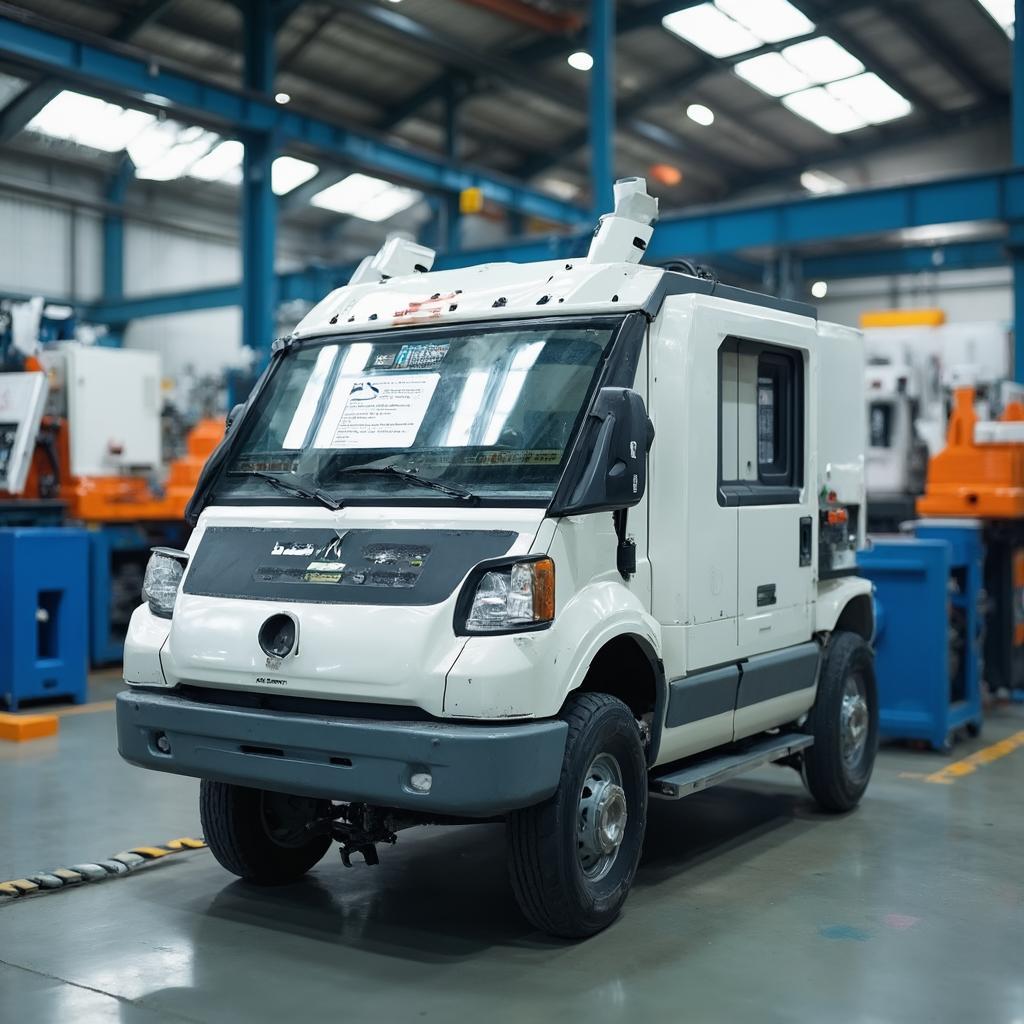
What Custom Machine Cover OEM Means in 2026
OEM in industrial cover manufacturing means you provide the complete specification and the factory builds exactly what you specified. Dimensions, material grades, seam construction, hardware selection, labeling requirements. That sounds simple.
The complication is that most RFQs are incomplete in ways the buyer does not realize. A dimension set covering length, width, and height but omitting corner radii means the cover pulls tight at the curves and loosens at the flats. A material spec listing "600D Oxford" without specifying coating weight means the factory can ship fabric with 2 g/m² PU instead of 5 g/m² and still be "in spec."
The difference between a cover that protects and a cover that fits is about 80% specification and 20% manufacturing. Most procurement teams get the manufacturing part right. They audit the factory, check the ISO certificate, pull AQL samples. What they miss is the specification part. See our industrial machine cover OEM deep-dive for manufacturing-side details.
Material Specification: The Layer That Determines Everything
The fabric is not one thing. It is a composite decision with four variables that interact.
Base fabric. 210D polyester is the budget option. It weighs roughly 65 g/m² before coating and tears at about 380 Newtons in the warp direction. Works for indoor dust covers. Fails outdoors within one season. 600D Oxford polyester weighs about 210 g/m² uncoated, tears at roughly 800 Newtons warp, and forms the baseline for most mid-range industrial covers. 1000D and 1680D ballistic nylons push tear strength past 1,500 Newtons but cost 2.5 to 4 times more per meter and require heavier sewing equipment.
Coating chemistry. PU (polyurethane) coating is the workhorse. Applied at 2–3 g/m², it provides basic water resistance for about 6 months of outdoor exposure before pinhole leakage begins. Applied at 5–6 g/m², the same chemistry lasts 18–24 months. TPU (thermoplastic polyurethane) laminate at 0.15–0.20 mm thickness delivers 3+ years but costs about 40% more per square meter. PVC coating on polyester is cheaper than PU but adds 180–250 g/m² of weight and stiffens below -10°C.
Temperature ceiling. Standard PU-coated polyester begins to degrade above 80°C continuous exposure. For applications near motors, exhaust components, or steam lines, silicone-coated fiberglass handles up to 500°C intermittent. The cost difference is roughly 3.5× per square meter. For detailed fire safety requirements, see our fire-retardant covers guide covering ASTM E84 and NFPA 701 compliance.
Flame resistance. If your end-user facility requires ASTM E84 Class A or NFPA 701 compliance, the coating chemistry changes. Standard PU is not flame-retardant. FR-rated PU formulations exist but reduce UV resistance by roughly 15–20% compared to non-FR equivalents. This trade-off matters if the cover is outdoors in Arizona versus indoors in a climate-controlled factory.
The material spec on your RFQ should read something like: "600D Oxford polyester, 5–6 g/m² PU coating both sides, UV stabilizer package, bond test ≥5 N/cm per ISO 2411, hydrostatic head ≥2,000 mm per ISO 811." That is six lines on a spec sheet. It eliminates the bottom 70% of supplier quotes because low-cost factories cannot source fabric cut from that grade and still meet their margin.
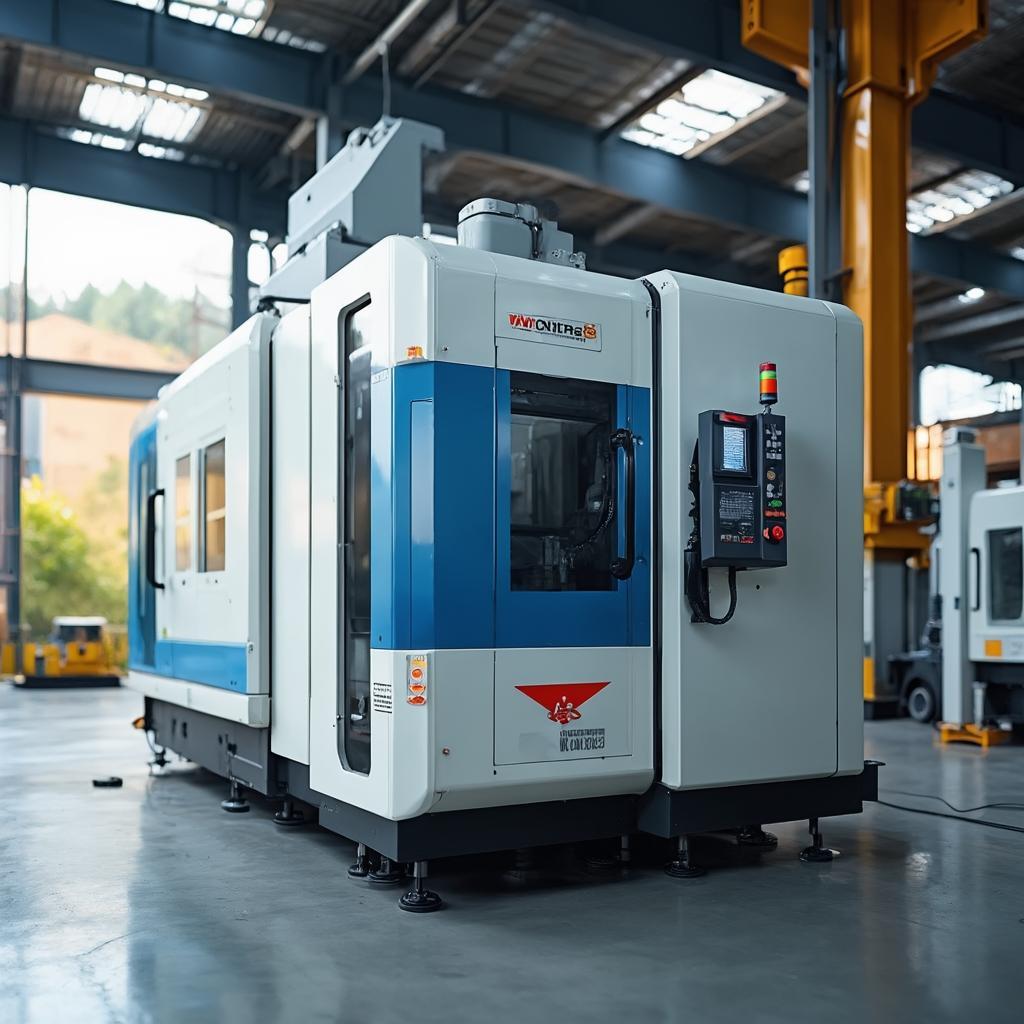
The RFQ That Actually Works
Most machine cover RFQs fail at the dimensional specification stage. Here is what a proper dimensional spec includes, beyond length × width × height.
Corner radii. A machine housing with 50 mm corner radii needs a cover pattern that accounts for the curve. A pattern cut for sharp 90-degree corners bags at the sides and stretches at the top. Specify radii on all corners or provide a STEP file the factory can import into CAD.
Protrusions. Control panels, junction boxes, cooling fans, cable conduits. Each protrusion requires either a pocket in the cover fabric or a cutout with a flap closure. List every protrusion with its dimensions and position relative to a reference corner. Missing one means the cover will not fit.
Bottom hem clearance. If the machine sits on a raised base or plinth, the cover hem needs to clear the base height. Too short and the cover rides up. Too long and it pools on the floor, wicking moisture into the fabric edge.
Access requirements. Does maintenance need access to the control panel without removing the entire cover? Specify a zippered access panel with position and opening direction. Does the cover need to stay on during operation? Specify ventilation panels — two offset vents, one low and one high, creating convection airflow without water ingress. For a step-by-step breakdown of the full OEM workflow, see our custom cover process guide.
Seam Construction and Hardware: Where Covers Actually Fail
The fabric rarely fails first. What fails is the seam. What fails is the zipper. What fails is the hem that sat in a puddle for three days.
Seam type matters. A single-needle lockstitch with 4 stitches per centimeter is the default. It is also the weakest seam under repeated loading. For covers over 10 kg or covers subjected to wind load, specify a double-needle chain stitch with 5–6 stitches per centimeter and a seam allowance of at least 12 mm. The strength difference is roughly 40% in pull testing.
Thread selection. Bonded polyester thread with UV inhibitor. Nylon absorbs 4–6% of its weight in water, swells, and degrades under sunlight. In environments with coolant mist or washdown chemicals, nylon thread loses tensile strength roughly twice as fast as bonded polyester. The cost difference: about 15 cents per cover.
RF welding versus stitching. For covers that must be fully waterproof — outdoor storage covers, marine environment covers — RF-welded seams eliminate stitch holes entirely. The fabric layers fuse together under high-frequency electromagnetic energy. No needle holes means no water ingress path. RF welding adds roughly $2–$4 per linear meter of seam compared to sewn construction. It only works with PVC and TPU-coated fabrics. PU alone will not weld.
Hardware attachment. Every zipper, buckle, D-ring, and Velcro strip attaches at a point load. Without a reinforcement patch behind the attachment point — sewn in with a box stitch — the hardware pulls out under repeated use. A reinforcement patch adds about 30 seconds of sewing time per attachment. Low-cost factories skip this step. The covers look identical in the approval sample. They fail differently in the field: the zipper pulls clean out of the fabric, leaving a tear you cannot repair.
Zipper specification. A #5 coil zipper holds up for light indoor covers. For outdoor covers over 5 kg, specify a #8 or #10 molded tooth zipper with a storm flap covering the zipper track. The storm flap prevents water from driving through the zipper teeth under wind pressure. This adds about 80 cents per linear foot of zipper.
Quality Control: What to Verify Before the Container Leaves
Factory QC for custom covers breaks into three stages. Skip any one of them and you are gambling.
Pre-production sample (PPS). The PPS is the single most important QC document in the entire OEM process. It confirms fit, function, print placement, and stitch quality before production cutting begins. Approve it in writing. Do not move to production without sign-off. If the PPS has a problem, the entire production run will have the same problem multiplied by your order quantity.
Inline inspection. During production, pull one random cover from every 50 units. Check dimension tolerance within ±1 cm on all critical measurements. Check seam integrity with a pull test on stress seams. Check closure function — open and close every zipper, buckle, and Velcro closure 10 times. Problems caught at inline stage cost minutes of rework. Problems caught at final inspection cost days. Problems caught by your customer cost orders.
Final random inspection. After production, run a statistically representative sample inspection (AQL 2.5 per ISO 2859-1). Check for visual defects — oil stains, skipped stitches, misaligned prints. Test water resistance with a spot test on the coated side. Measure critical dimensions on a minimum of 3 units from the sample. Verify packaging integrity — no torn polybags, barcodes scannable, labels correctly applied.
According to Grand View Research, the global industrial protective covers market was valued at approximately USD 820 million in 2023 and is projected to grow at a CAGR of 4.8% through 2030. The growth driver is not more machines. It is more expensive machines that cost more to repair when protection fails. For a broader overview of quality standards in cover manufacturing, see our QC standards guide.
A 6-Point Specification Checklist for Your Next OEM Order
Before you send the RFQ, run through this list.
1. Complete dimensional drawing. Include corner radii, protrusion positions, hem clearance, and access panel locations. A STEP file is worth 20 emails of clarification.
2. Material spec with test standards. State the coating type, coating weight, hydrostatic head per ISO 811, and bond strength per ISO 2411. Not just "waterproof."
3. Seam type and thread specification. Double-needle chain stitch, 5–6 stitches/cm, 12 mm seam allowance, bonded polyester UV-stabilized thread.
4. Hardware list with reinforcement requirement. Every zipper, buckle, D-ring, and Velcro strip listed with dimensions. Reinforcement patches specified at every attachment point.
5. QC acceptance criteria. AQL level, dimension tolerance, seam pull test threshold, closure cycle count. If it is not written into the PO, the factory is not obligated to meet it.
6. Pre-production sample approval in writing. This is not optional. A PPS that has not been signed off means the factory can ship whatever comes off the line.
The procurement teams that get the best results are not the ones with the lowest target price. They are the ones whose RFQ leaves the factory with zero questions about what "acceptable" means.
Need Custom Machine Covers for Your OEM Program?
Tell us your machine type, operating environment, and target volume. We'll quote within 48 hours with material recommendations at three grade levels — supported by ISO 811 and ISO 2411 test data.
Request a QuoteFrequently Asked Questions
What is the minimum order quantity for custom machine cover OEM?
Standard MOQ for custom machine covers is 50–100 units per design for common materials like 600D Oxford with PU coating. Custom colors, specialized coatings like silicone fiberglass, or FR-rated fabrics typically require 200–300 units. Low-volume prototype runs of 10–20 units are possible but carry a 25–40% price premium over standard volume pricing.
How long does the OEM process take from RFQ to delivery?
A first-time order runs 8–10 weeks from signed RFQ to FOB port. Pattern making and sample approval: 2 weeks. Material procurement: 2 weeks. Production and QC: 3–4 weeks. Packing and loading: 1 week. Sea freight from Shanghai to Rotterdam adds 4–5 weeks; to Los Angeles adds 2–3 weeks. Repeat orders using existing patterns drop to 5–6 weeks total production time.
How do I verify material quality before the order ships?
Request a pre-production sample with a material test report showing coating weight, hydrostatic head per ISO 811, and bond strength per ISO 2411. During final inspection, request a spot water resistance test and a seam pull test on randomly selected units. Third-party inspection agencies like SGS or Bureau Veritas can perform these tests at the factory for roughly $300–500 per inspection day.
Can I get REACH or RoHS compliant covers for the European market?
Yes. All materials used in covers destined for the EU must comply with REACH Regulation (EC) No. 1907/2006. Specify REACH compliance in your RFQ and request a certificate of compliance from the factory. For fabrics with PVC coating, also verify phthalate content — several phthalates are restricted under REACH Annex XVII. We provide REACH compliance documentation with every EU shipment.
What if the factory substitutes materials after sample approval?
Write a material substitution clause into the purchase order: "Any material substitution requires written approval from the buyer, accompanied by a new material sample and updated test report, before production begins." Without this clause, the factory can legally substitute "equivalent" materials without notice — and "equivalent" rarely means identical in performance.